Menu
A medical supplier's brand, website and company profile, built from one source and checked before any of it shipped.
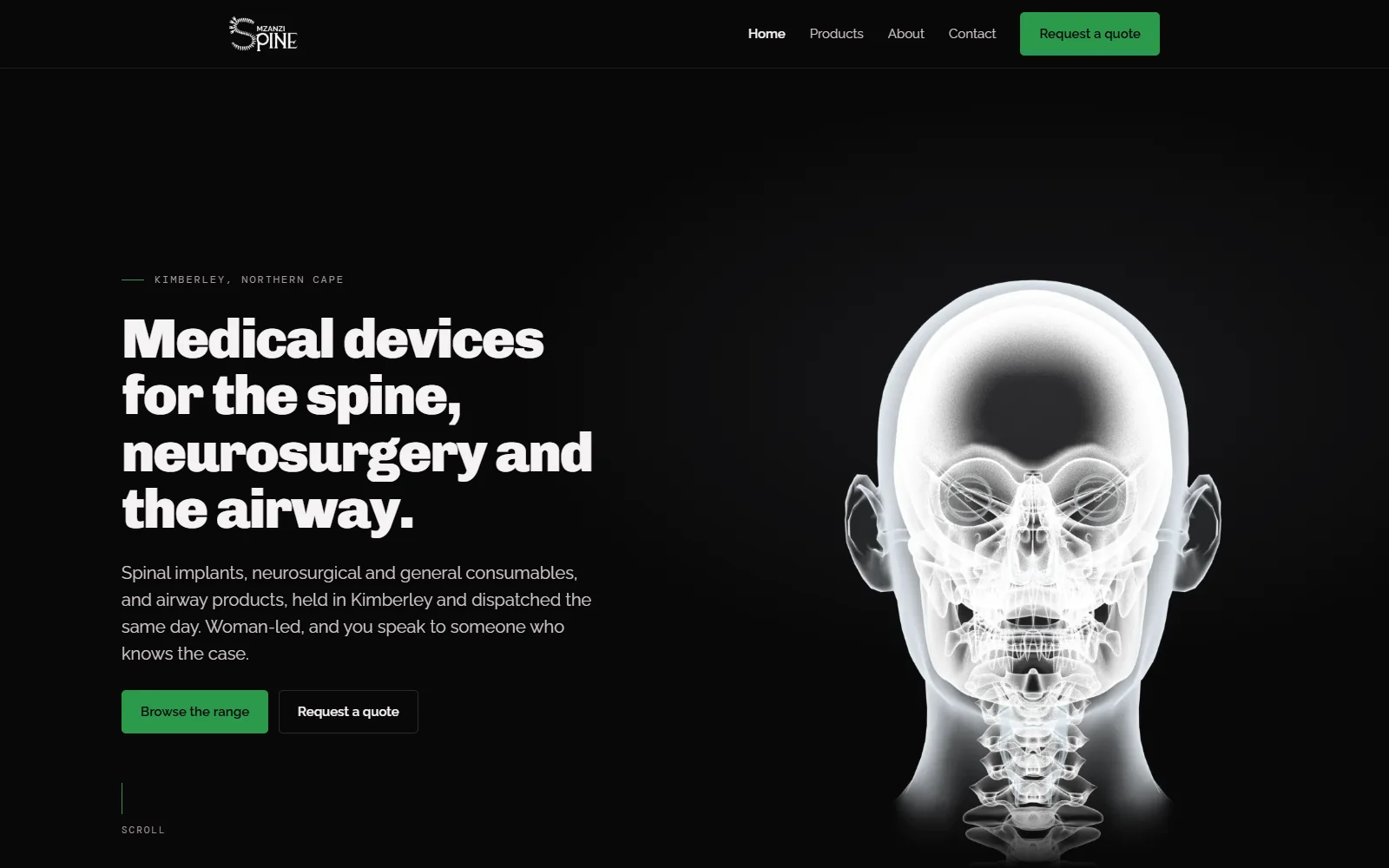
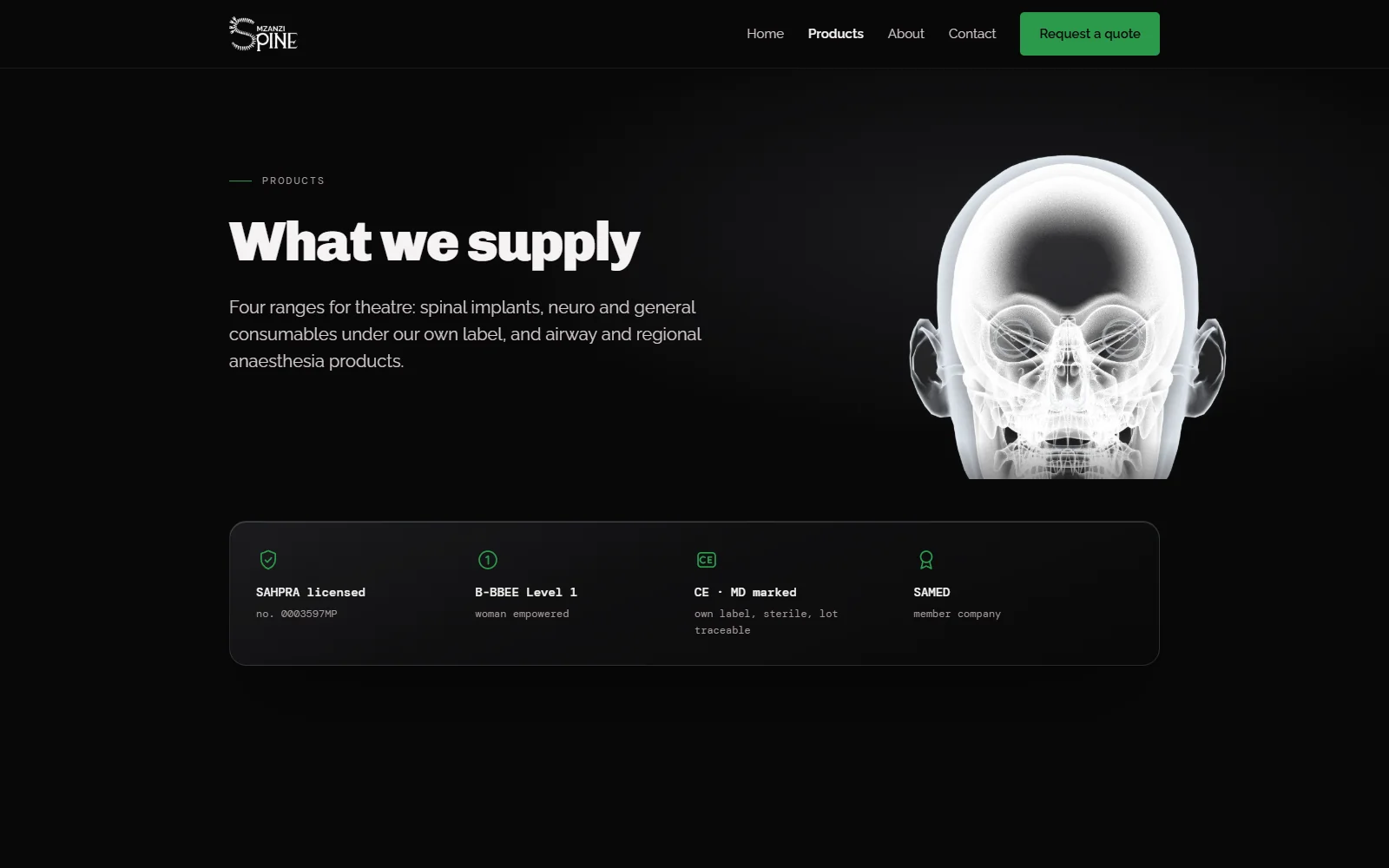
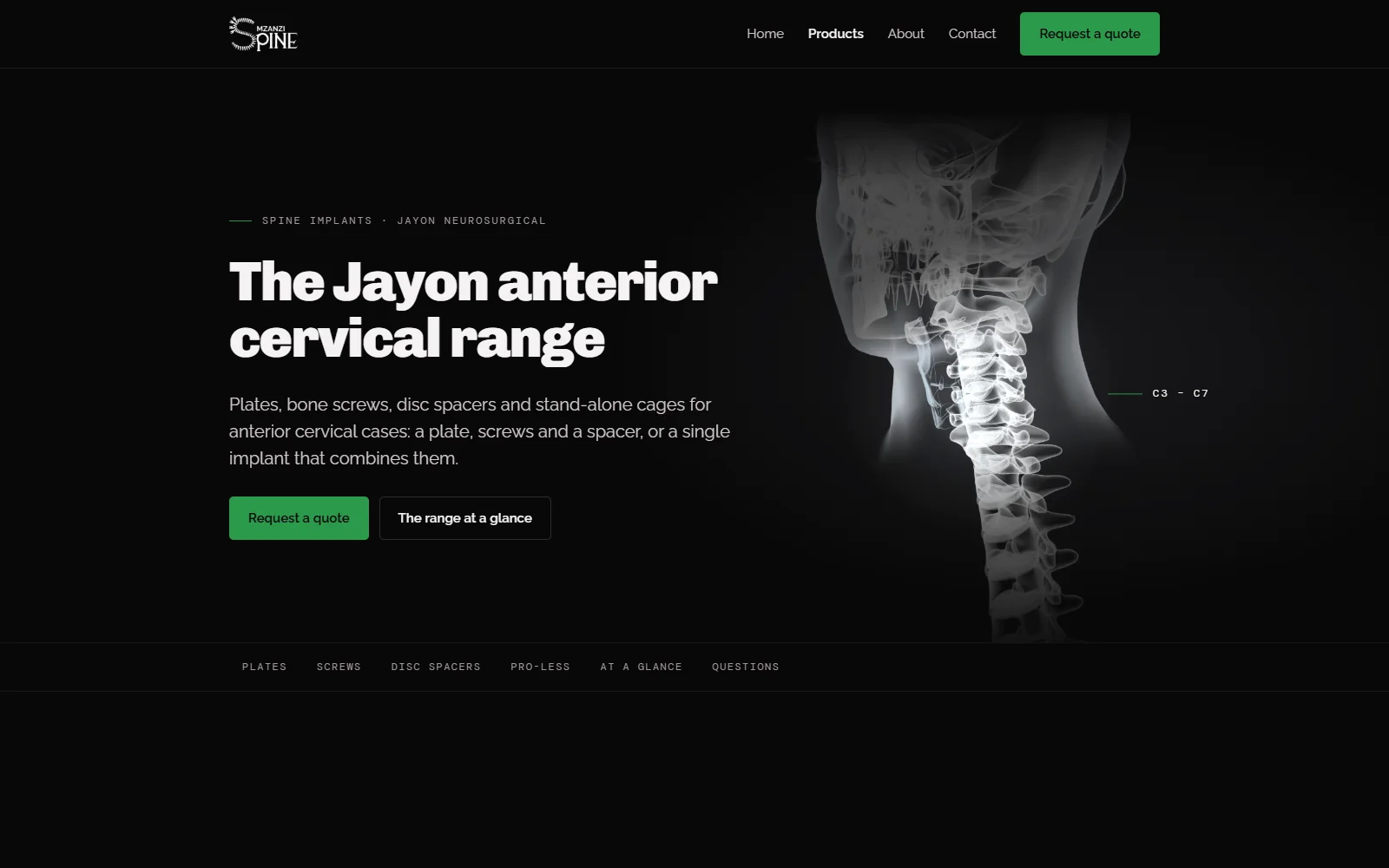
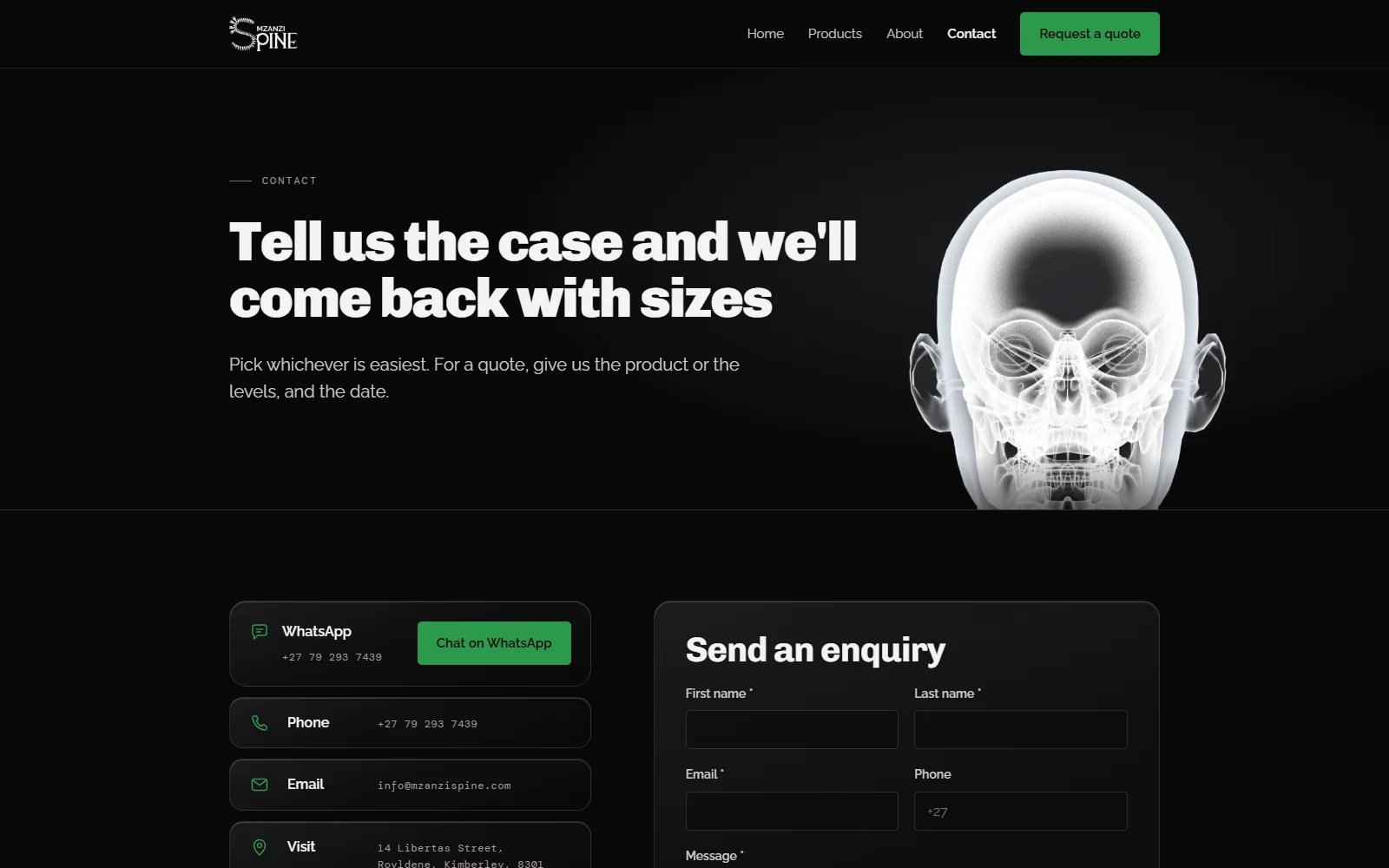
Mzanzi Spine supplies spinal implants, neurosurgical consumables and airway products. It approved its new brand on 10 September 2026, and within the week everything else shipped from the same source:
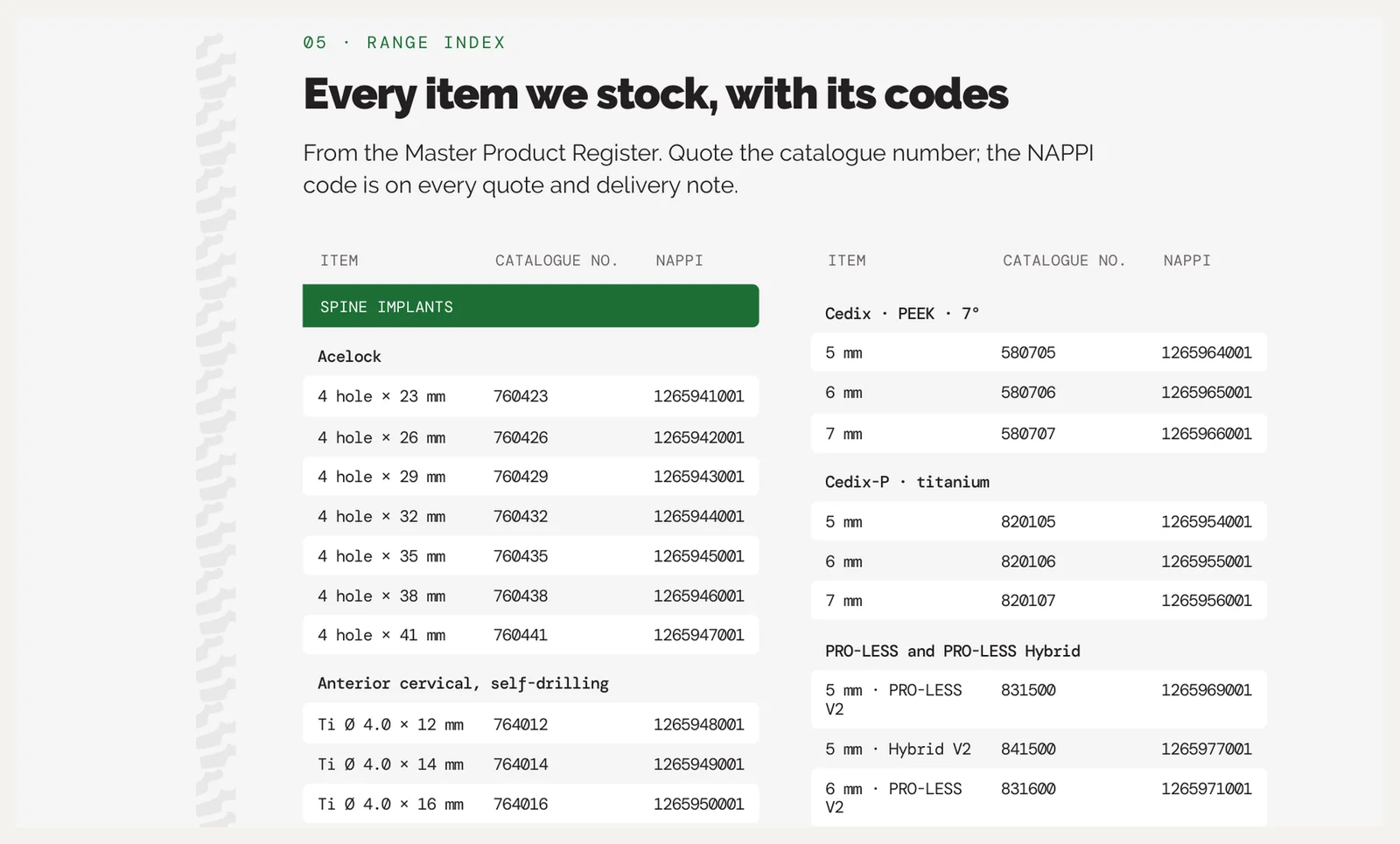
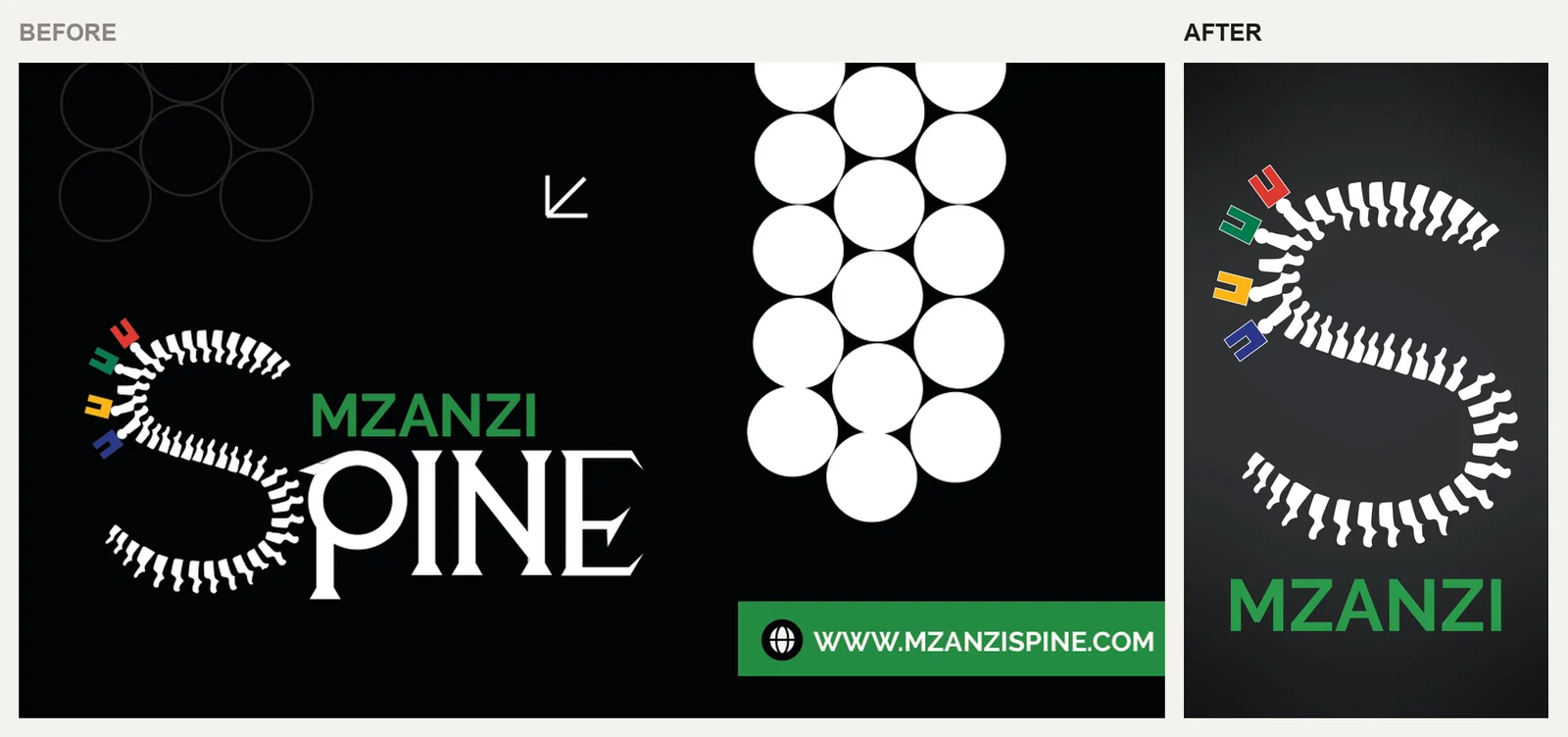
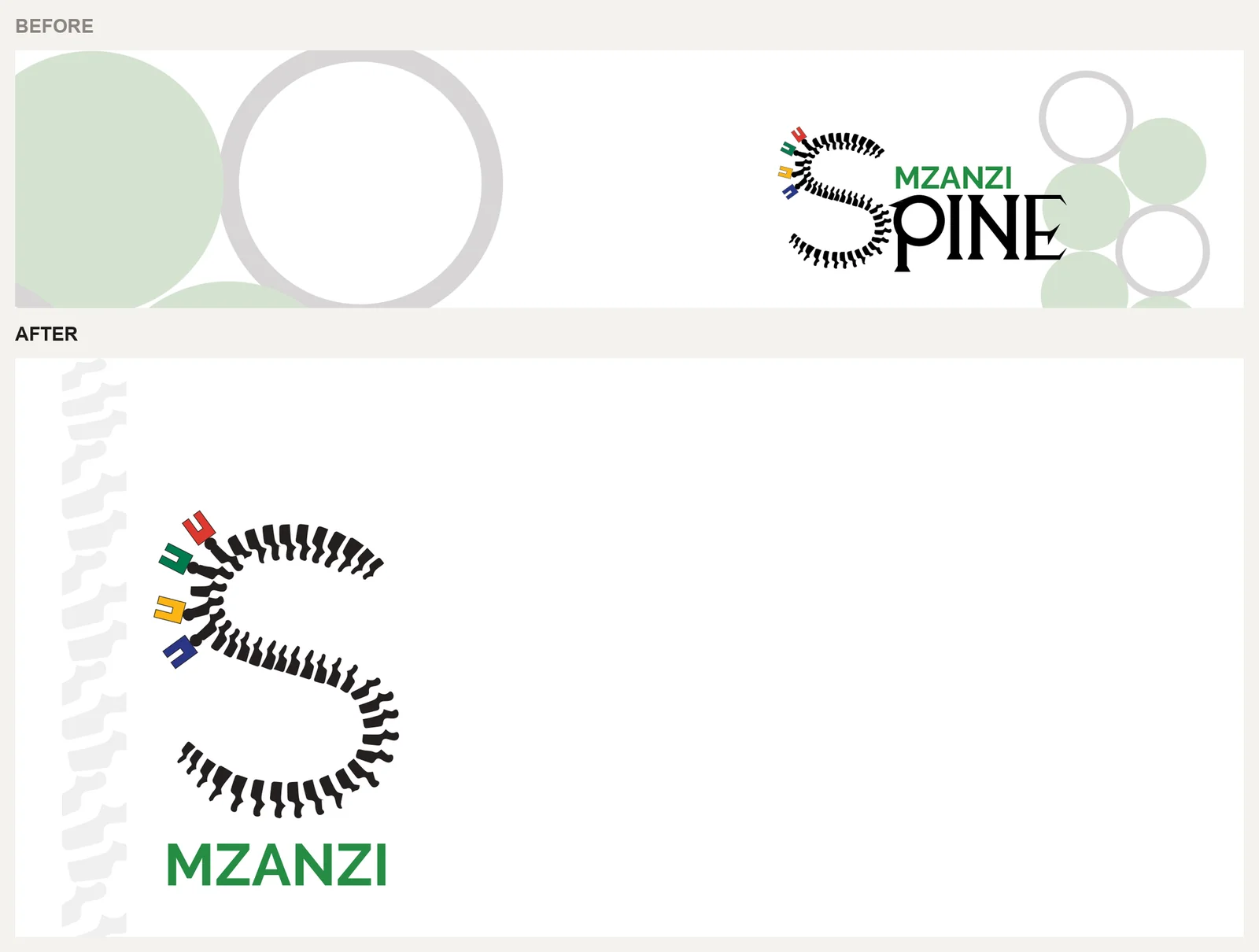
The logos were mine, made in 2024, and I made much of what followed them. The brand grew one piece at a time, each made when it was needed. An audit of everything already in circulation, in August 2026, found twelve places where it disagreed with itself, from the phone number and the street address to the company's core values.
Mzanzi Spine's rule is that no device claim ships without a published source. Six claims in the existing material were checked against the literature. Five had no published study behind them, and they were dropped. The sixth was kept and reworded to what its own trial measured, because the trial contradicted the wording in use, and its source now travels with it wherever it is printed.
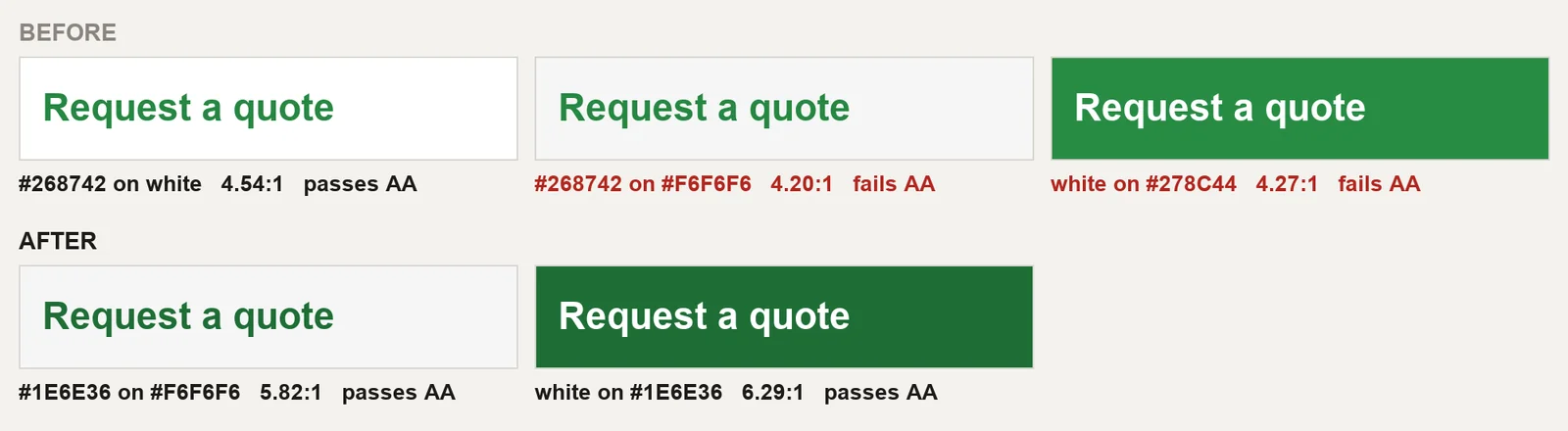
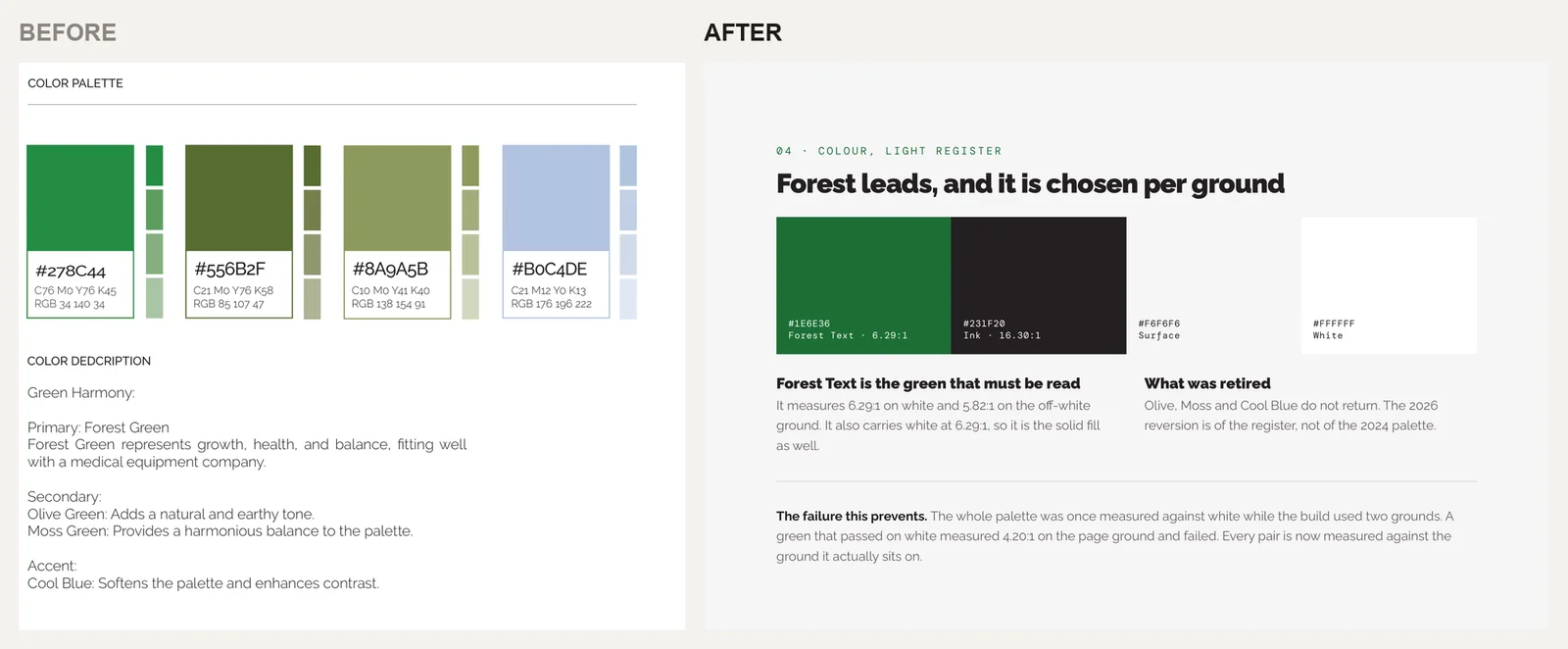
Every colour pair is measured against WCAG AA on the ground it actually sits on. The 2024 guideline gave four colours: Forest Green, with Olive, Moss and Cool Blue. The text green, #268742, measured 4.54:1 on white and passed. The website's pages sit on an off-white, #F6F6F6, and there it measured 4.20:1 and failed. White type on Forest Green, the button on every page of the first prototypes, measured 4.27:1 and failed too. One darker green, #1E6E36, replaced both: 5.82:1 on the page, and 6.29:1 under white type.
The mark was measured as well. The 3,278 gaps between its vertebrae set a minimum size for each process, from 27 mm in digital print to 109 mm in embroidery.
The mark stayed. Around it:
A supplier's brand is in front of surgeons, theatre staff and procurement at once: on a quote, a delivery note, a stand and a website. When every piece comes from one source, a new product line or a new event is a rebuild, not a redesign, and every number on it can be traced.